

What We Observed in 2026
In Frederick County's second City Nature Challenge, over 2,000 people participated. Team Frederick observers documented wildlife in local neighborhoods and natural areas; while others joined to appreciate nature and meet others with common interests. Community partners organized guided outings, featured wildlife at storytimes, and led bioblitzes and iNaturalist trainings.
Together, we added data to Frederick County's biodiversity map, the Maryland Biodiversity Project, and helped the Washington DC Metro Area reach number 3 worldwide for number of observers.
Here are some highlights.
Team Frederick 2026 Results:
-
282 Registered Observers
-
12,049 Observations (5,000 more than last year)
-
1,685 Species
-
2,000 Participants
Special Recognition:
-
Most Observations made by individual: Kathy Barylski (1,111 Observations, 462 Species)
-
Cecelia Arnold observed two new county species: Strawberry Root Weevil and Gonomyia sulphurella
TOP SPECIES OBSERVED IN FREDERICK COUNTY

Six of the Top 15 Observations are invasive species, indicated by the "IN" in the top right hand corner.
BENNETT CREEK BIOBLITZ
What we were looking for:
At a 3+ acre private property in Adamstown, a team of naturalists and Hood College students set out to create a biodiversity map with a focus on marine species. This area in the Monocacy watershed is threatened by the proposed 70 mile electrical transmission line for the Maryland Piedmont Reliability Project (MPRP). The purpose of the line is to enhance the electric grid managed by PJM, which would benefit mostly data centers in Virginia.
.jpeg)
.jpeg)
Cricket Frog

.png)
Species
What we discovered:
This area is rich in aquatic and terrestrial species. From the creek, Hood College students sampled macroinvertebrates. An EPT calculation of 41% (which measures pollution sensitive aquatic species) indicates a healthy stream! On the banks of the creek were 53 species of native plants. The Northern Cricket Frog, a vital component of wetland ecosystems, was prevalent near the creek. This frog is endemic to the U.S and was not documented elsewhere in the county during the Challenge.
LIFE AT MOON VALLEY ORGANIC FARM
What we were looking for:
Organic farms typically support 30% more species and 50% more individual organisms than conventional farms. In addition to avoiding synthetic pesticides and fertilizers, practices such as pollinator strips, natural landscapes, plant selection for beneficials, and leaving cover crops longer, can increase biodiversity further. What insects and other arthropods would we discover on this 70 acre veggie farm in Woodsboro in two hours?
_edited.jpg)
Brown-belted Bumblebee
.jpeg)

Scarlet-bordered Assassin Bug

Species
What we discovered:
This farm’s practices result in crucial refuges for wildlife, particularly promoting the health of pollinators and the watershed. In our short time here, we documented 12 bee and 7 butterfly species. Numerous beneficials like spiders, lacewings, wasps, and birds naturally control pests. The presence of a mayfly indicates clean water nearby and a Scarlet-bordered Assassin Bug was a county record.
MARYLAND BIODIVERSITY PROJECT
What we were looking for:
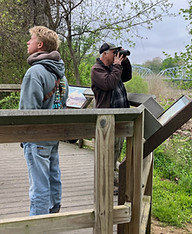
Seasoned community scientists from the Maryland Biodiversity Project (MBP) were invited to increase Frederick County records of birds and nocturnal fauna. The MBP is a nonprofit that maintains a living atlas of the state’s flora and fauna and makes this carefully curated biodiversity archive available for science, conservation, and education.
.png)
Bird Species
Azalea Sphinx Moth
Hooded Warbler


© Jonathan Irons
© Frode Jacobsen
What we discovered:
An MBP birding team criss-crossed the county and contributed significantly to our total of 128 bird species, including the only record of the county’s official bird, the American Kestrel, for the Challenge. Meanwhile, 4 naturalists set up lights in the Frederick City watershed overnight to observe nocturnal fauna that is rarely documented. Highlights from that endeavor include the Blueberry Leafminer. During the Challenge, over 20 new species for Frederick County were added to the MBP.


.jpeg)